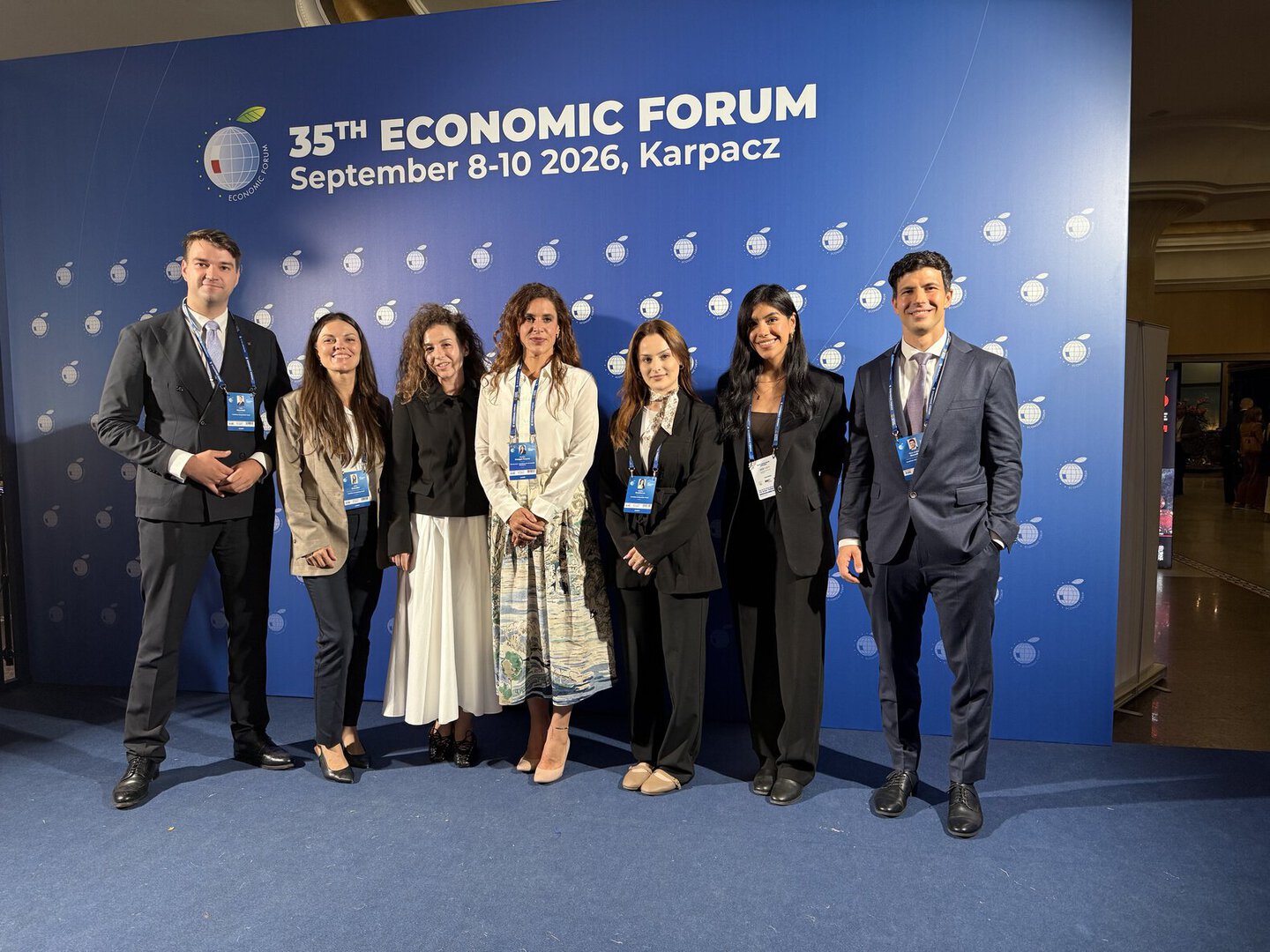
At the 35th Economic Forum in Karpacz, Poland, the Austrian Integration Fund (ÖIF) participated in two international panel discussions on key challenges facing European migration and integration policy. The discussions focused on the labor market integration of refugees, Europe's demographic development, and the importance of language, work, values, and social cohesion.
Jana Zavacka, Head of the Vienna Integration Center, and Timo Bovelino, Head of Integration Centers, participated in the discussions on behalf of the Austrian Integration Fund (ÖIF). The Economic Forum in Karpacz is one of the most important economic and socio-political dialogue forums in Central and Eastern Europe, bringing together representatives from politics, business, academia, and civil society.
Refugees and Europe's labor needs: Integration determines the contribution
As a partner of the panel “Migration, Work, Culture and Integration: Can Refugees Help Address Europe's Demographic Crisis?”, the Austrian Integration Fund (ÖIF) contributed its expertise to the discussion. Jana Zavacka discussed the contribution refugees can make to addressing labor shortages and demographic changes in Europe.
The central question was how immigration can translate into genuine social and economic participation. From the Austrian Integration Fund's (ÖIF) perspective, German language skills, rapid access to the labor market, the utilization of existing qualifications, and economic self-sufficiency are particularly crucial.
Zavacka emphasized that while migration can contribute to mitigating demographic trends, it will not solve the aging of European societies on its own. Rather, the crucial factor is how well those people already living in Europe can find employment and earn a living independently.
A particular focus was placed on practical integration work in Vienna. Integration measures must begin early and closely link language support, skills development, and labor market integration. Direct contact between job seekers and companies, rapid skills assessment, and the recognition of foreign qualifications could help to better utilize existing potential and avoid long-term under-skilling.
It was also emphasized that integration requires both opportunities and clear expectations: people should receive the necessary support to learn German, gain a foothold in the labor market, and become economically independent. At the same time, the goal must be to avoid long-term dependence on state support.
The Austrian perspective was complemented by Monika Köppl-Turyna from EcoAustria, who illuminated the connection between migration, demographic change, labor demand, and fiscal implications. Justyna Segeš Frelak from the ICMPD further contributed a comparative European perspective, demonstrating how different migration and integration policies influence the participation of refugees in the labor market and society.
Societal resilience: Cohesion requires common foundations
Timo Bovelino represented the Austrian Institute for International Economic Studies (ÖIF) on the panel “Social Resilience in an Era of Multidimensional Uncertainty”. The focus was on how societies can maintain their cohesion and adaptability in the face of economic, political, technological and security-related uncertainties.
From the perspective of the Austrian Integration Fund (ÖIF), integration is a key factor in societal resilience. Societies are more stable when people can participate linguistically, economically, and socially, develop trust in institutions, and know and respect the shared rules of coexistence.
Bovelino emphasized the importance of language, work, and values. German language skills provide access to education, the job market, and institutions. Employment enables economic independence, strengthens social connections, and promotes civic participation. At the same time, a diverse society needs a common legal and democratic framework.
This common framework includes, in particular, the rule of law, equality between women and men, individual freedoms, and the rejection of violence and extremism.
Polarization and societal fragmentation were also topics of discussion. International conflicts, disinformation, extremism, and isolated social or digital environments can exacerbate social tensions. Integration measures can counteract this by promoting language skills, orientation, participation, and connection to state and social institutions.
German, work and values as a common foundation
Both panel discussions made it clear that successful integration has both an economic and a social dimension. German language skills, employment, and self-sufficiency create the foundation for independence; adherence to shared rules and values strengthens cohesion and a sense of belonging.
The Austrian Integration Fund (ÖIF) thus introduced a clear integration policy perspective to Karpacz: Integration succeeds where people are given the opportunity to quickly become part of society – and at the same time take responsibility for their own integration.