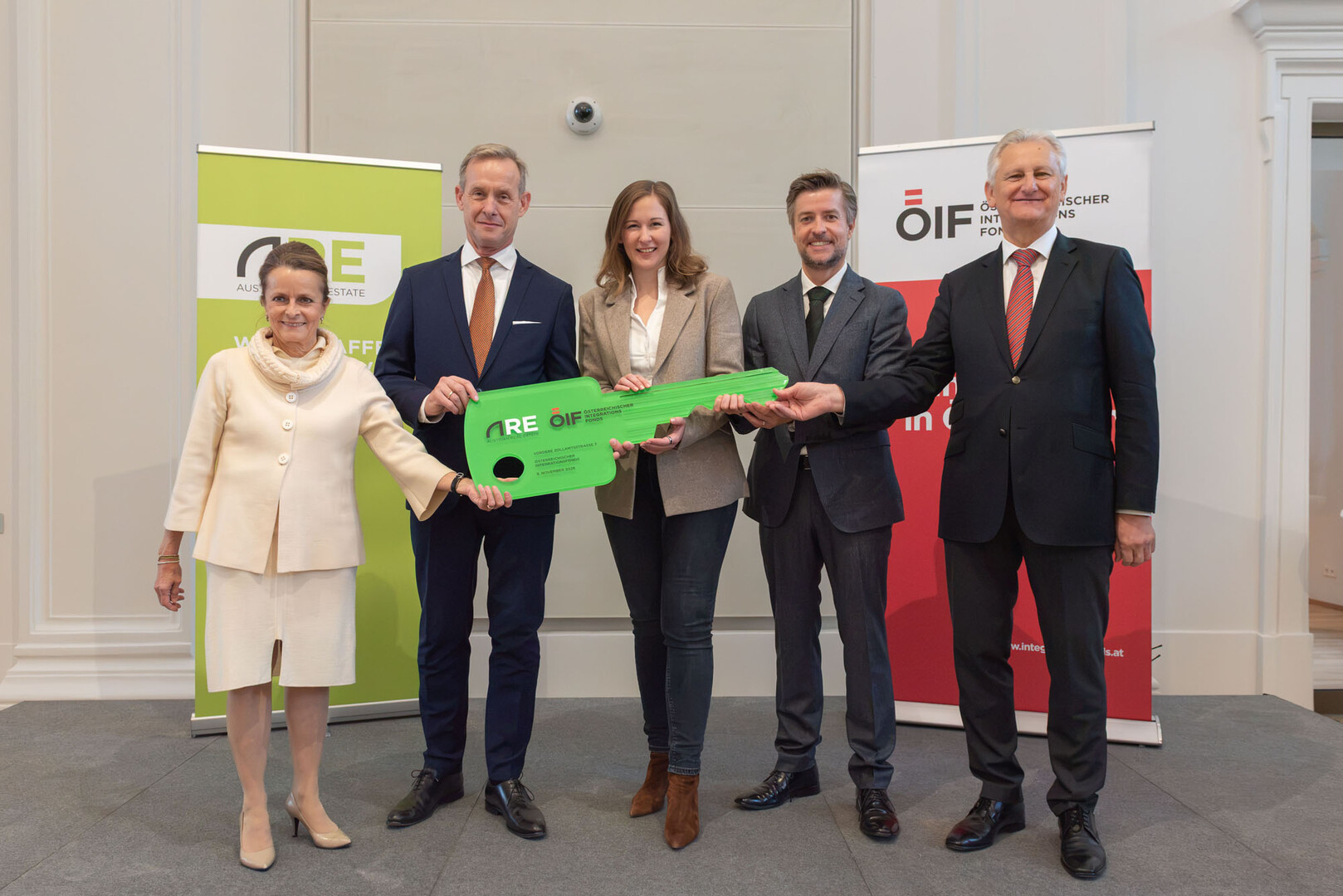
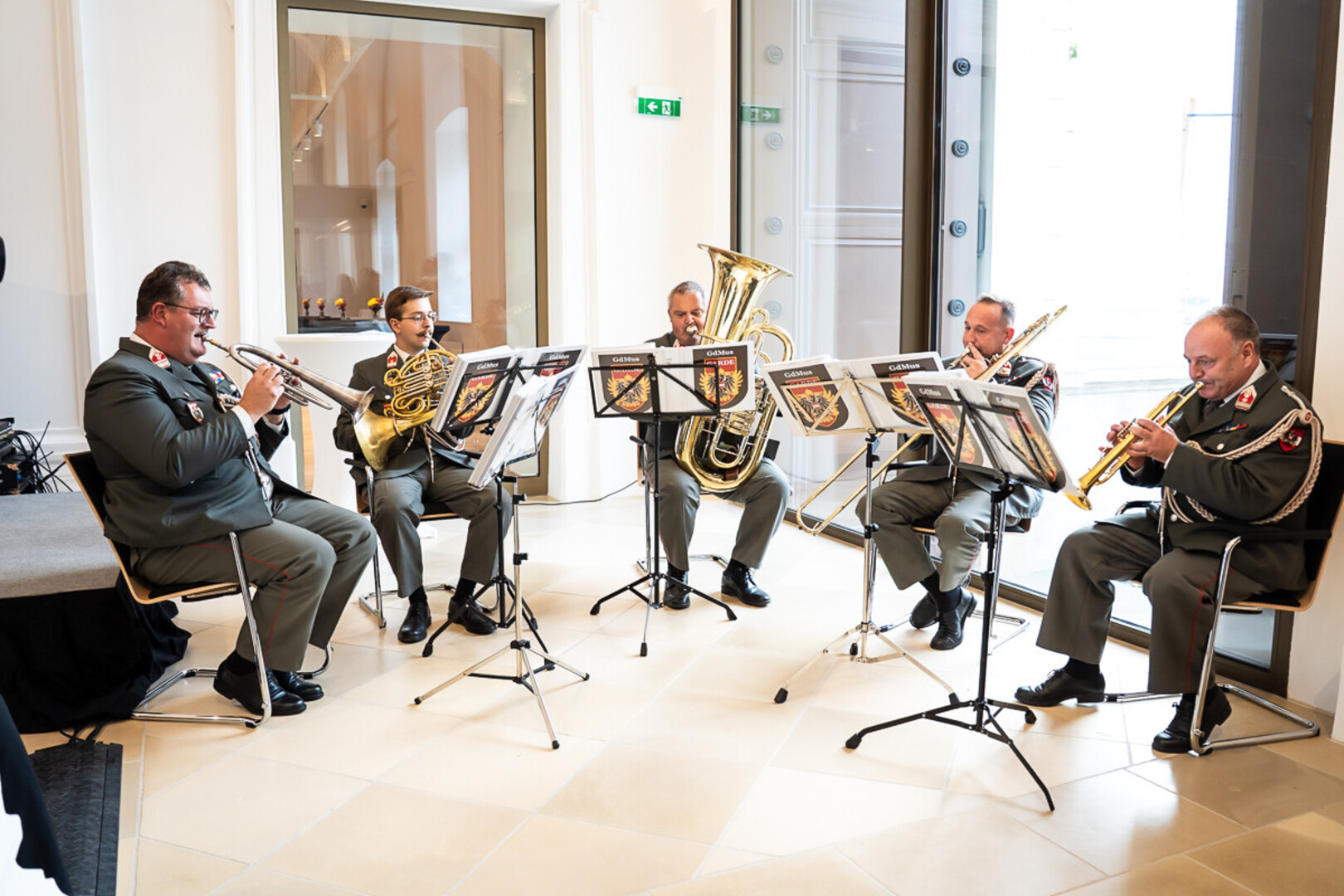
On November 9, 2026, the symbolic handover of the keys to the new premises of the Austrian Integration Fund (ÖIF) took place at the Old Main Customs Office in Vienna's Landstraße district. The ceremony was attended by Integration Minister Claudia Bauer, BIG Managing Directors Christine Dornaus and Gerald Beck, and ÖIF Director Franz Wolf. The Old Main Customs Office, built approximately 180 years ago as a state administrative building, will thus assume a new public function: As the "House for Austria," it will become the ÖIF's central advisory, course, and examination center, as well as an open space for social exchange.
Automatically translated with AI
This page was automatically translated using AI and serves as an additional aid and service. For legally binding content, please use the German page.
New premises: Bundesimmobiliengesellschaft (BIG) hands over the keys to the old main customs office to the Austrian Integration Fund (ÖIF).
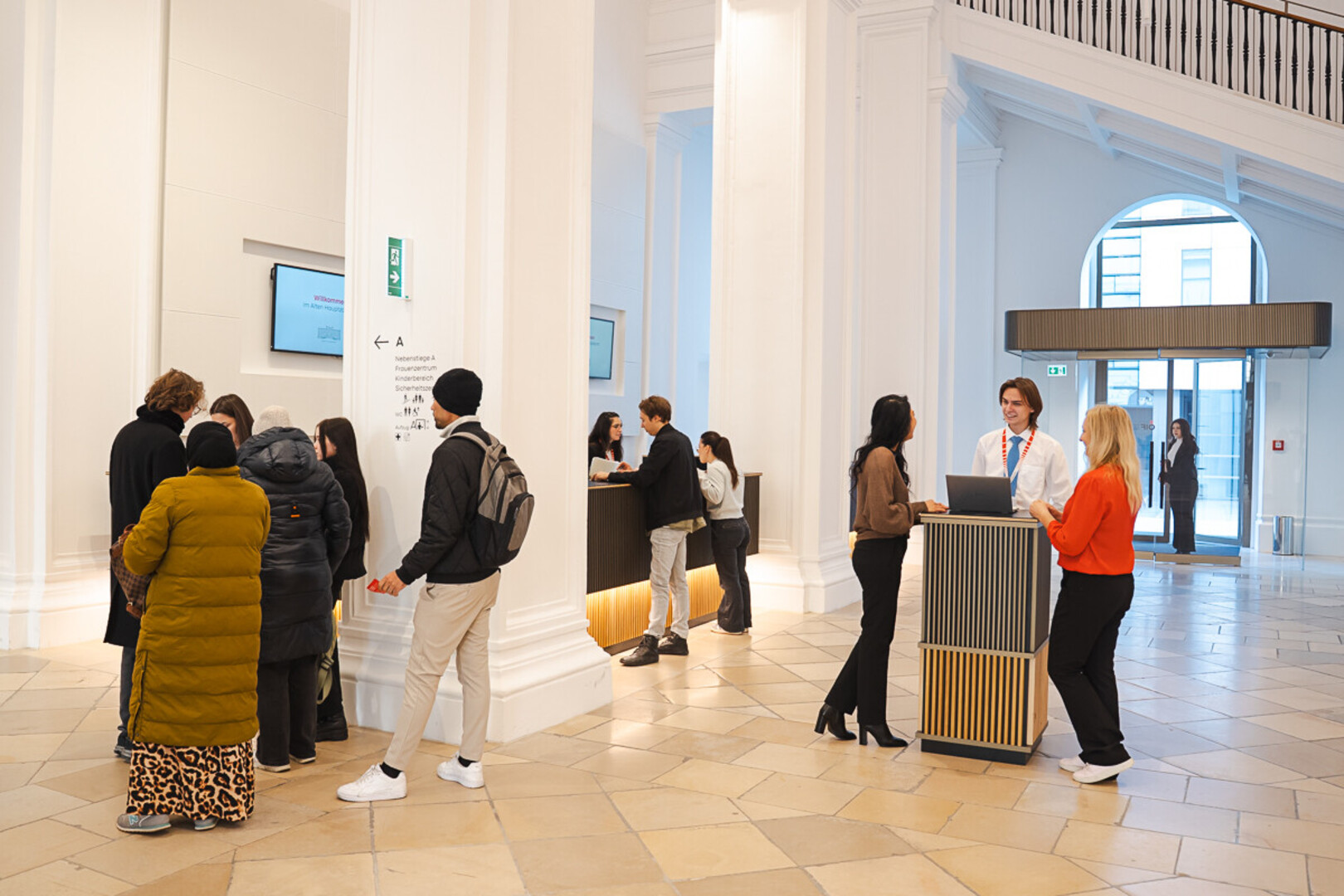
A house for Austria: The Austrian Integration Fund (ÖIF) is bringing together four locations in Vienna. The former main customs office will become a central advisory, course and examination center, as well as a place for social exchange.
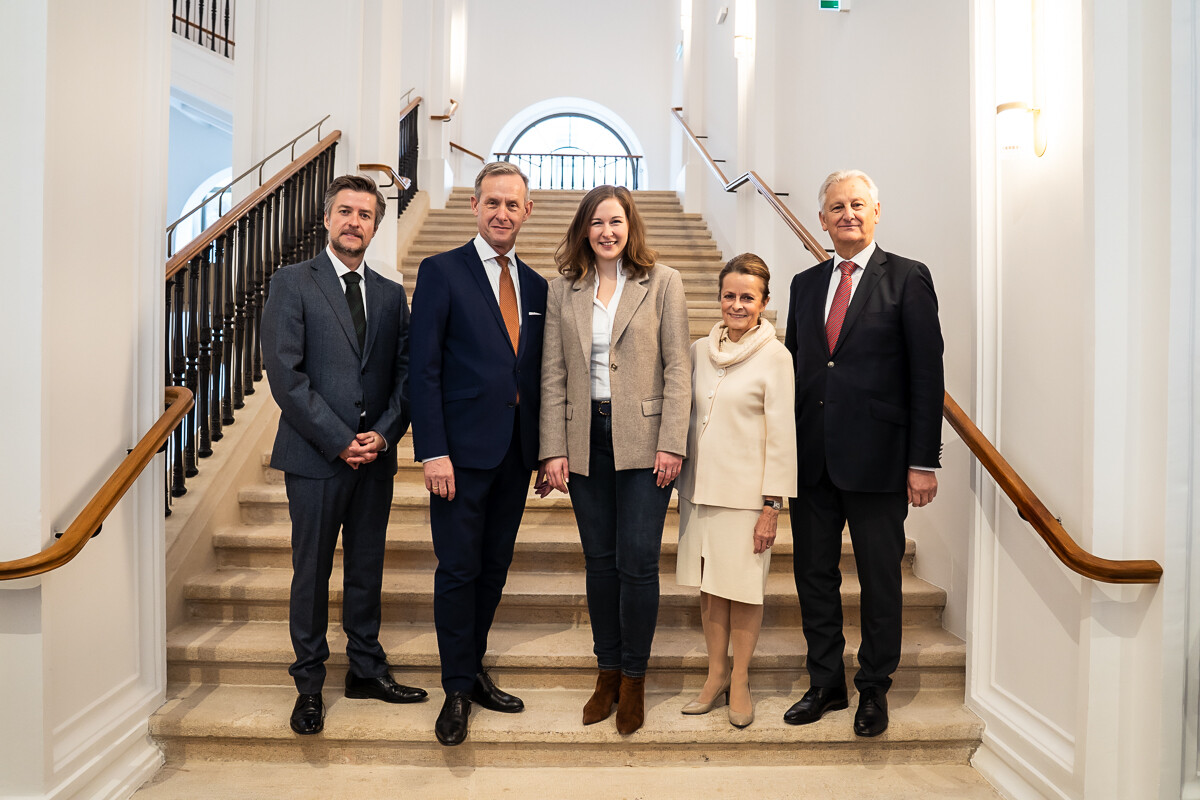
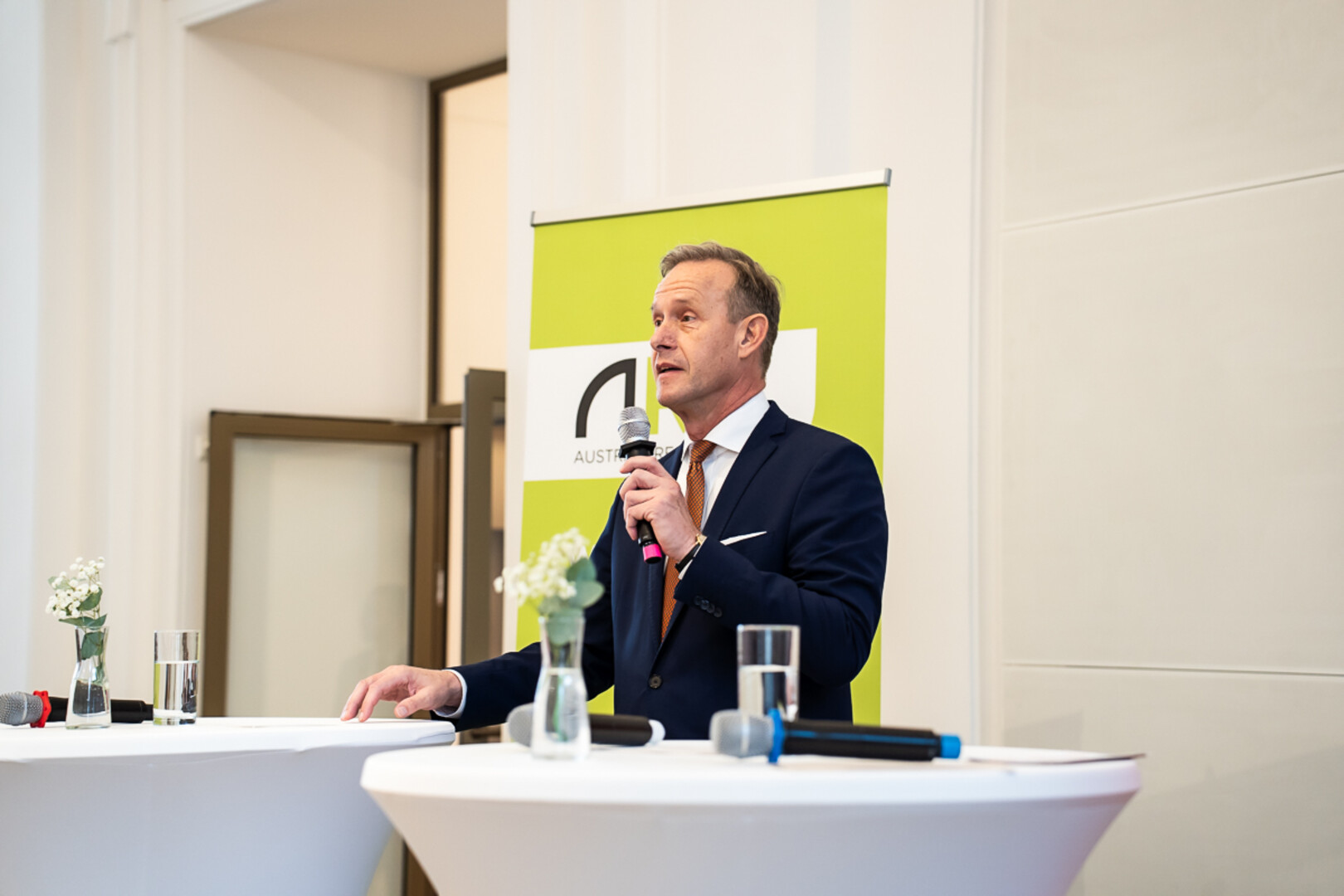
Franz Wolf, Director of the Austrian Integration Fund: “With the Old Main Customs Office, the Austrian Integration Fund (ÖIF) is creating a space for social exchange and simultaneously bringing together key integration measures such as values courses, integration assessments, and progress reviews, as well as a large women's center with childcare, all under one roof. The Old Main Customs Office is thus becoming a house for Austria. The central question is how people of different origins can successfully live together in Austria and what is needed for this: German language skills, employment, and attitudes that make coexistence possible.”
Gerald Beck, Managing Director of the Federal Real Estate Company (BIG): "With the comprehensive renovation of Vorderen Zollamtsstraße 3, we have succeeded in revitalizing a significant listed building and creating the conditions for its modern, efficient use. It was particularly important to us to preserve the building's architectural quality and historical substance while simultaneously adapting it to the requirements of future-oriented workspaces and service areas. Together with the Austrian Integration Fund, we have created a place here that generates social value and demonstrates how existing historical buildings can be successfully repurposed for new public tasks."


A historic building is given a new purpose
With the completion of the renovation, four previously separate Vienna ÖIF locations are now united under one roof in the Old Main Customs Office. The focus is on learning German, conveying fundamental European values, the principles of the Austrian rule of law and Austrian culture, and supporting participants on their path to independent living in Austria.
Two-thirds of the space is dedicated to integration programs and services for the public. Here, values and orientation courses, integration assessments – for the first time also in digital form – and, in the future, discussions on integration progress will take place. The ÖIF Women's Center is being significantly expanded and will offer comprehensive childcare with accompanying language support for the children in its care. This will make it even easier for mothers, in particular, to participate in ÖIF integration programs. In addition, volunteer-led German language courses are being expanded.
At the same time, the historic building, as the "House for Austria," is specifically aimed at the public: with a comprehensive range of events, training courses, and seminars, including those for teachers, police officers, and public officials, it creates a space for social exchange. The Old Main Customs Office is also dedicated to addressing key questions of our coexistence.
Pioneers of modern and efficient work in public administration
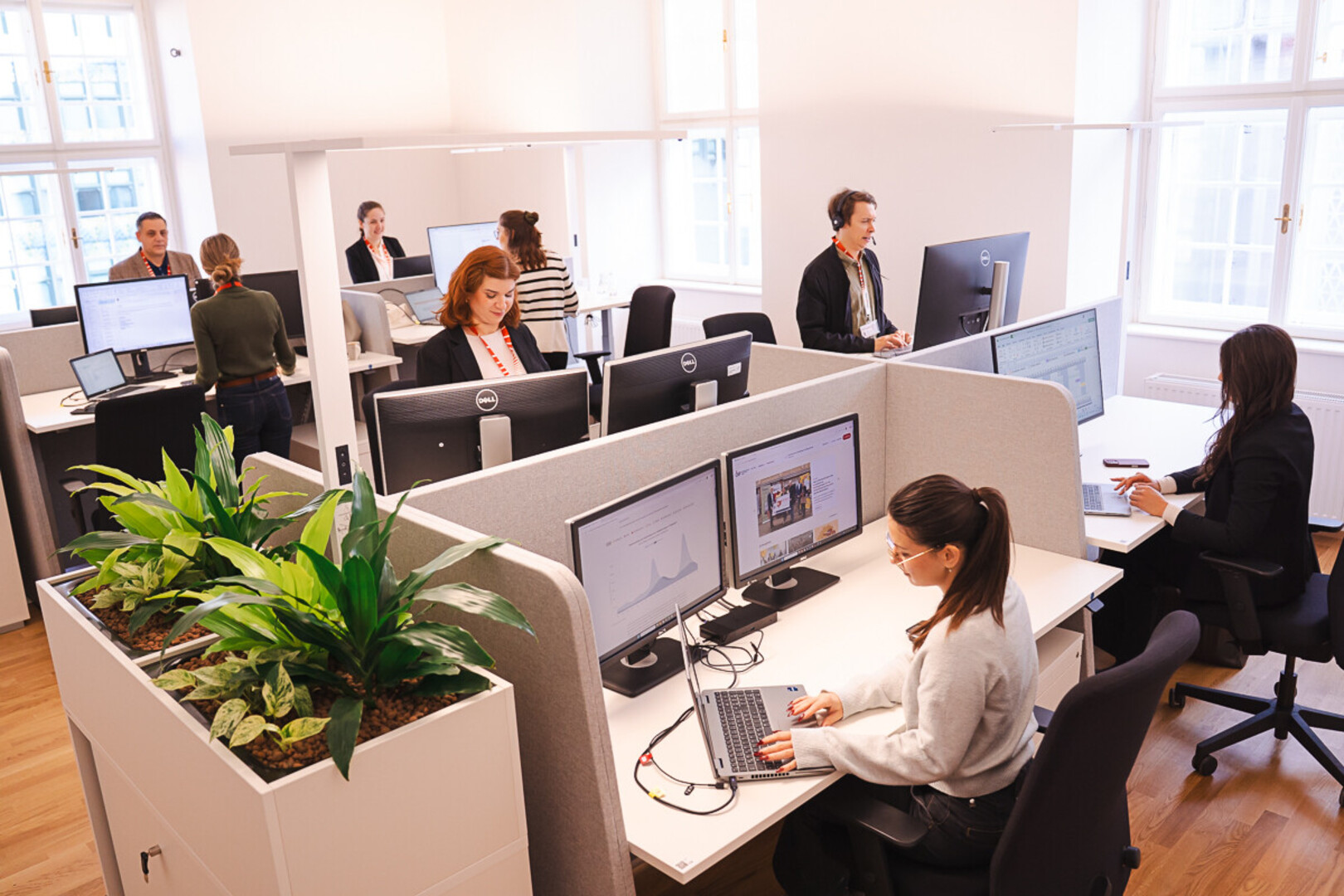
The former main customs office serves as a prime example of modern and efficient work in the public sector: task-based work, shared workspaces, and the consistent digitalization of workflows enable particularly efficient use of space. Only one-third of the area is dedicated to office and administrative purposes. With less than 17 square meters of net floor space per workstation – including a share of common areas, meeting rooms, and circulation spaces – the Austrian Integration Fund (ÖIF) requires less than half the space of comparable federal agencies.


Preserving historical substance, sustainably modernizing buildings
As part of a comprehensive renovation, BIG restored the listed building to its original, historical condition: The five-aisled entrance hall and the ticket hall on the first floor were revitalized, later additions were removed, and the rooms were reconstructed according to the original plans of architect Paul Eduard Sprenger. At the same time, the building services were modernized, and surfaces and sanitary facilities were renewed. The facade was also conserved in close consultation with the Federal Monuments Office. New windows improve energy efficiency, and a photovoltaic system enables the use of renewable energy. The comprehensive sustainability measures are also reflected in the klimaaktiv certification.